A telltale clue that lip lines are overtreated is not the look, it is the sound. If a patient returns saying “my S sounds whistle” or “my straw slips,” the perioral complex was pushed past its functional margin. The goal is not a frozen barcode or a puffy mouth, it is a mouth that speaks, smiles, and sips, without broadcasting the treatment. That means respecting the orbicularis oris as a sphincter, tracking how neighboring muscles contribute to puckering and enunciation, and using dosing that nudges rather than knocks out activity.
I have treated hundreds of patients seeking smoother vertical lip lines without compromising articulation. The difference between a seamless refresh and a speech blip usually comes down to millimeters and micro-units. Below I map what consistently works, where the risks lie, and how to iterate over time without flattening personality or function.
What creates perioral lines and why “just Botox” is not the whole answer
Vertical lines around the mouth are not one thing. In animation, the orbicularis oris cinches like a drawstring. Over time, repetitive puckering, sun exposure, and dermal thinning etch fixed creases. Smokers and straw drinkers develop lines earlier due to frequent pursing. Dentition changes matter as well. Loss of dental support, especially in the upper incisors, reduces lip projection and tightens the perioral ring, deepening folds even at rest.
Botulinum toxin improves dynamic lines from overactivity, not volume loss or dermal collapse. That is why microdosing is the backbone strategy here. Small, superficial boluses soften excessive constriction during speech and straw use while preserving the core seal of the mouth. If static grooves remain after animation relaxes, the next layer is skin quality work: light fractional resurfacing, low-viscosity filler placed intradermally in microthreads, or biostimulatory devices in select cases. Overloading toxin to chase a static crease is the main route to articulation trouble.
The functional map: orbicularis zones and neighbors that can sabotage speech
The perioral ring is not uniform. Think of it in quadrants and vertical vectors.
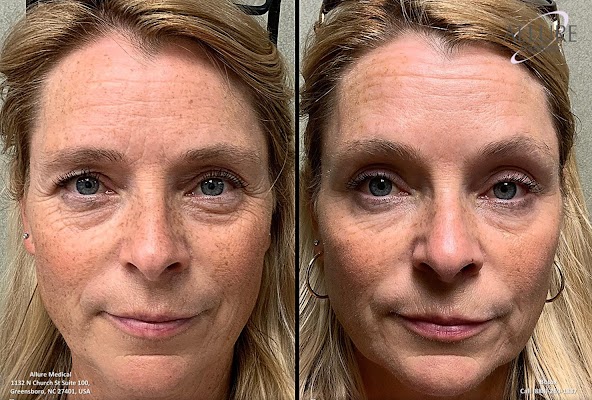
- Upper vermilion columns and philtrum columns: hyperactivity here causes vertical pinching when saying F and V sounds. Excess weakening creates “flat smile” and straw slippage. Lateral upper lip: overcorrection can cascade into asymmetric smile or lip incompetence, especially if one side dominates due to past dental work or scar tissue. Lower vermilion and medial chin: orbicularis interacts with mentalis. If mentalis dimpling coexists, treating mentalis with a few units can reduce compensatory over-puckering above. DAO (depressor anguli oris): heavy downturn pull exaggerates corner creasing. A touch to DAO can lift corners subtly and reduce perioral strain without touching the central ring. Nasalis and “bunny lines”: some patients over-scrunch the midface when pronouncing consonants. Light treatment there can reduce upper lip tension without invading the orbicularis.
The neighbors matter because they guard function. When the DAO and mentalis are overworking, the orbicularis oris recruits to hold the mouth line steady. Treating the ring alone in such a face creates compensation issues that show up in speech and smile control.
Dosing philosophy: microdosing to preserve movement, measure, and adjust
For perioral lines, my baseline approach is microdosing. Using onabotulinumtoxinA, I dilute to 2 to 2.5 units per 0.1 mL and inject 0.5 to 1 unit per point, usually 6 to 10 points total distributed around the upper and sometimes lower lip. That yields a typical session total of 3 to 8 units, rarely up to 10 units with cautious spacing. The aim is a 10 to 20 percent reduction in pursing force, not a 50 percent drop.
Injection plane is intradermal to very superficial subdermal. If the needle bevel sits too deep, the diffusion reaches more of the sphincter and the seal weakens. The classic reversible test is to watch the vermilion blanch lightly as you inject microdroplets. If you see no superficial effect, you are too deep.
On needle choice, a 32 to 34 G short needle offers control. Angle the needle shallow, bevel up, and deposit a small bleb. Keep diffusion predictable by spacing injection points 5 to 7 mm apart, avoiding boluses near the wet-dry junction and the modiolus. For the upper lip, stay 2 to 3 mm above the vermilion border and focus on the columns where lines form in animation. Treat asymmetry by placing one extra 0.5 unit on the more dominant side, never two extra points at once.
This is one of the rare areas where injection volume control matters as much as units. A more concentrated dilution can tighten diffusion if you have a talker who rapidly metabolizes toxin and needs consistency, while a more dilute solution spreads subtly and can be useful for etched fine creping in a thin-skinned patient. Both strategies can deliver the same total units but change the feel and edge softness.
Keeping speech intact: practical safeguards I use in the chair
Two tests save headaches. First, before injecting, ask the patient to speak a sentence with S, F, V, and P sounds, then sip water through a thin straw. Note where dimpling or sharp vertical pinches occur and whether seal strength seems borderline. Second, after treating, schedule a two-week check to repeat the same sentence and straw test. Any early lisp predicts functional over-relaxation, and you can adjust other muscles to balance rather than adding more toxin to the ring.
Avoid crossing the midline with strong points. Central lip control influences vowels. Target lateral micro-points instead. Skip the wet mucosa, and avoid placing toxin within 1 to 2 mm of the vermilion border when doing a lip flip for philtral height, unless your dose is tiny. A micro-flip can help lengthen the upper lip aesthetically but narrows oral aperture during straw use. For frequent presenters, singers, or those who play wind instruments, either avoid the flip or reduce to single 0.5 unit points at two lateral sites.
The last safeguard is education. Ask patients to minimize heavy straw sucking and whistling for 3 to 5 days while diffusion settles. Also discuss their upcoming commitments. If someone has a speech-heavy event within a week, reschedule. Toxin onset around the mouth typically begins in 2 to 3 days, with full effect at 10 to 14 days. Planning matters more here than in the forehead.
The perioral zone is not an island: DAO, mentalis, and nasalis adjustments
A small lift at the corners reduces upper lip strain. For DAO, I start with 1.5 to 2 units per side, placed at the point one finger breadth lateral and slightly inferior to the oral commissure, angled toward the mandible but kept superficial. The safety goal is to avoid diffusion into depressor labii inferioris, which would pull the lower lip off-center during speech. If a patient has downturned corners and deep marionette shadows, this minor lift often produces a more open smile and reduces the perceived need to tighten the central lip.
Mentally tense chins can mimic perioral lines. If you see orange-peel dimpling at rest or during speech, 3 to 6 units total to mentalis, split into two to four superficial points, calms the chin and prevents upward tethering of the lower lip. This makes orbicularis oris dosing easier and safer.
If upper midface scrunching drives vertical lines when laughing or saying consonants, treat bunny lines with tiny doses, 2.5 to 5 units per side in nasalis. This reduces nose-lip synergy that otherwise prompts an exaggerated pucker. Again, keep it light.
Precision for asymmetry and dominant sides
Everyone chews more on one side. Dominant masseter use can bias facial pull and create asymmetrical perioral function. On animation analysis, the dominant side will pull more firmly and show deeper vertical lines. Address this in two ways. First, accept mild asymmetry as natural and inject fewer points on the weaker side. Second, if masseter hypertrophy is prominent or the jawline is under tension, treat bruxism with small-to-moderate masseter dosing. Many patients at 20 to 25 units per side (onabotulinumtoxinA) feel reduced clenching without chewing fatigue, and the perioral zone behaves more evenly. Obviously, tailor to the individual. Men and those with high muscle mass usually need higher dosing ranges, but do not let that habit bleed into the perioral plan where microdosing remains king.
Brow and midface asymmetries also echo downward. A low brow on one side can change oral posture via compensatory facial tension. If a patient is already receiving glabellar or forehead treatment, align unit mapping so both sides of the face relax symmetrically. Use conservative forehead and glabellar dosing for first-timers, then adjust at the two-week visit.
Diffusion control: depth, spacing, and the periorbital-style respect for safety margins
The orbital rim teaches humility, and so does the mouth. Maintain a safety margin around the modiolus. Do not inject into the commissure itself, and keep your deepest points 5 mm away. The modiolus is a muscle fiber crossroads, and deep diffusion there can compromise the oral commissure’s sphincter-like function. For patients with thin skin, even a standard superficial injection can travel wider, so reduce volume, increase spacing, and accept a subtler first session.
Temperature and handling influence potency, but not in ways that save a bad technique. Reconstitute and store within label guidance, keep the vial refrigerated, and avoid excessive agitation. If your practice manages multi-area treatments in one session, plan the perioral area last, once you have watched the face animate after other injections. Sequencing helps you detect residual strength that should be preserved around the mouth.
Longevity, metabolism, and planning touch-ups without over-accumulating effect
Around the mouth, effects tend to fade faster than in the glabella or crow’s feet. Expect 6 to 10 weeks of noticeable softening from microdoses, though some patients hold 12 weeks. High-movement zones and lighter dosing explain the short arc. Fast metabolizers, endurance athletes, and highly expressive personalities often notice earlier fade.
For maintenance, I prefer touch-ups at 8 to 10 weeks for the first two cycles, then stretch to 12 weeks if function and smoothing hold steady. At touch-up visits, reach for half the original total units if lines are modest, or a repeat of the original if creasing is fully back. Avoid stacking sessions closer than six weeks, which can distort your sense of cause and effect. If a patient asks for more during week one because they do not see much change, wait until day 10 to 14. Onset needs time, and speech safety depends on patience.
Resistance, variability, and what to do when the effect softens too quickly
True immunogenic resistance to onabotulinumtoxinA is uncommon in aesthetic dosing, especially with small perioral totals. If loss of effect occurs across regions, consider product switches or check if the patient had high-dose exposures elsewhere, such as migraine protocols. In localized perioral variability, look first to technique: depth too deep, dilution too diffuse for a thin lip, or unaddressed neighboring muscle dominance.
If a switch is appropriate, align unit conversion sensibly. OnabotulinumtoxinA and incobotulinumtoxinA often map near 1:1 in practice, while abobotulinumtoxinA (Dysport) requires more units to achieve comparable effect, with published conversions being rough approximations rather than absolute. Consistency in dilution and injection plane matters more than the exact brand when the goal is speech-safe micro-control.
Preventative use and the limits of toxin alone
Preventative perioral work makes sense in high-movement patients who are starting to see faint lines that disappear at rest. Light microdosing two or three times per year can reduce repetitive etching. The caveat is skin quality. If the upper lip is thin with early elastosis, toxin alone will not stop creping. Pair it with low-energy resurfacing, nightly retinoids if tolerated, diligent sun protection, and targeted hydration. Preventative injections that ignore the dermis set unrealistic expectations and prompt unsafe dose creep.
Combining with fillers and resurfacing without a “blowout” look
When static lines persist, a microdroplet filler approach supports the skin without bulky projection. For the perioral zone, I favor very soft hyaluronic acid placed intradermally in microthreads, not boluses, across etched lines. The goal is to lift the micro-crease, not to inflate the lip. Place toxin first, then reassess at two weeks before adding filler. This avoids overfilling where muscle relaxation would have sufficed. For texture, fractional lasers or microneedling RF at low settings tighten the dermis and smooth micropuckers. Space energy treatments at least two weeks from toxin to avoid confusing edema with functional change.
Male anatomy, expressive personalities, and special cases
Men tend to have check here thicker musculature and less frequent lipstick lines, but when present, they often stem from aggressive mentalis activity or dental wear. Male dosing still follows micro principles. It may require one or two more points at 0.5 to 1 unit, yet the same speech risk applies. For public speakers and performers, document their articulation concerns and trial an even smaller first dose. The safety metric is normal consonant clarity at two weeks.
For the “very expressive” patient, measure strength rather than guessing. Have them count fast from fifty to fifty-five and watch perioral tension. Repeat at follow-ups. Over several cycles, muscle retraining occurs. You can sometimes reduce points because the patient learns to animate without over-pursing. That is a long-term benefit many overlook.
Complications to avoid and how to course-correct
Three issues are most common: straw leakage, lisping S or F sounds, and asymmetric smile or laugh lines.
Straw issues indicate central seal weakness. In future sessions, remove medial points and keep lateral micro-points only. If the problem is present at two weeks, do not add more toxin. Let it fade, adjust neighbors like DAO or mentalis with microdoses to rebalance, and consider a tiny intradermal filler for residual etched lines instead of more toxin.
Lisping suggests spread near the wet border or midline over-relaxation. Same remedy: withhold further orbicularis dosing this cycle, focus on antagonists, and adjust dilution to higher concentration with even smaller volumes next time.
Asymmetry usually reflects uneven strength or depth on one side. For immediate optics, a camera-ready trick is to treat the stronger opposing muscle slightly, such as a 0.5 unit lateral micro-point on the dominant side. For the next cycle, reduce points on the overtreated side and keep your needle consistently superficial. Mark photos and injection maps carefully. Consistency solves most asymmetries over two rounds.
Severe complications like oral incompetence are rare with microdosing. If they happen, reassure the patient, explain the temporary nature, and offer strategies like straw alternatives, softer foods, and speech practice until recovery, typically within 2 to 6 weeks depending on dose.
Where perioral work fits in a whole-face plan
Perioral lines are part of a pattern. If the forehead is over-relaxed, the face often compensates with midface and mouth tension. Balanced dosing across regions prevents the mouth from becoming the last overactive area. Unit mapping for forehead and glabellar treatment should respect brow lift mechanics and avoid heavy medial brow drop that would shift expression load downward. Crow’s feet can be treated without cheek flattening by keeping injections lateral and superficial, preserving zygomatic smile dynamics so the mouth is not asked to overwork.
Long-term, judicious perioral toxin can reduce the habit of over-puckering. There is mild muscle atrophy risk if you overshoot for years. That is another reason microdosing and cycling touch-ups at reasonable intervals beats aggressive initial correction. Patients stick with subtle results that feel natural. That consistency preserves not just speech but emotional expression and facial harmony.
A stepwise plan that reliably protects speech
Here is the tight, repeatable approach I use for most first-time perioral patients seeking fine-line softening without articulation change.
- Baseline assessment: record S, F, V sentence and straw sip, note line pattern, check dental support, evaluate mentalis and DAO. First session microdosing: 3 to 6 total units to upper lip in 6 to 8 intradermal points, 0.5 to 1 unit each, lateral-heavy, avoid midline wet border. Neighbor tweak if needed: 1.5 to 2 units per side DAO or 3 to 4 units total mentalis if baseline tension is high. Two-week check: repeat speech and straw tests, adjust minimal additional 1 to 2 units total if needed, or plan a microthread filler for static creases. Maintenance: touch-up at 8 to 10 weeks, then stretch to 12 weeks if speech remains crisp and lines controlled.
Needle angles, spacing, and tiny decisions that make or break the result
Small habits protect outcomes. Stabilize the lip with the non-dominant hand to lift the injection plane into the dermis. Insert at a shallow angle so the bevel just catches the papillary dermis, deposit a visible bleb, and withdraw. Keep points at least 5 mm from the vermilion border if doing multiple points, and keep away from the commissures by a similar margin. Favor symmetry, but not at the expense of matching function: one fewer point on a weaker side beats mirror-image mapping that over-relaxes. Photograph both at rest and mid-speech each visit.
When combining treatments, sequence the perioral injections after assessing forehead, glabella, and crow’s feet movements. If a patient receives masseter treatment, separate appointments by a few days or document chewing strength first. With each cycle, adjust in 0.5 unit increments. That discipline keeps articulation intact.
Final thoughts from the chair
The mouth telegraphs mistakes faster than the forehead. Patients forgive a slightly stubborn frown line. They do not forgive a lisp before a presentation. Microdosing, precise depth, neighbor balancing, and patient-specific mapping let you smooth perioral lines while preserving the sounds and habits that define someone’s day. Plan conservative first, document animation, and iterate with restraint. The cleanest compliment you can earn is when a patient says their lipstick no longer feathers, their photos look fresher, and nobody can tell why.